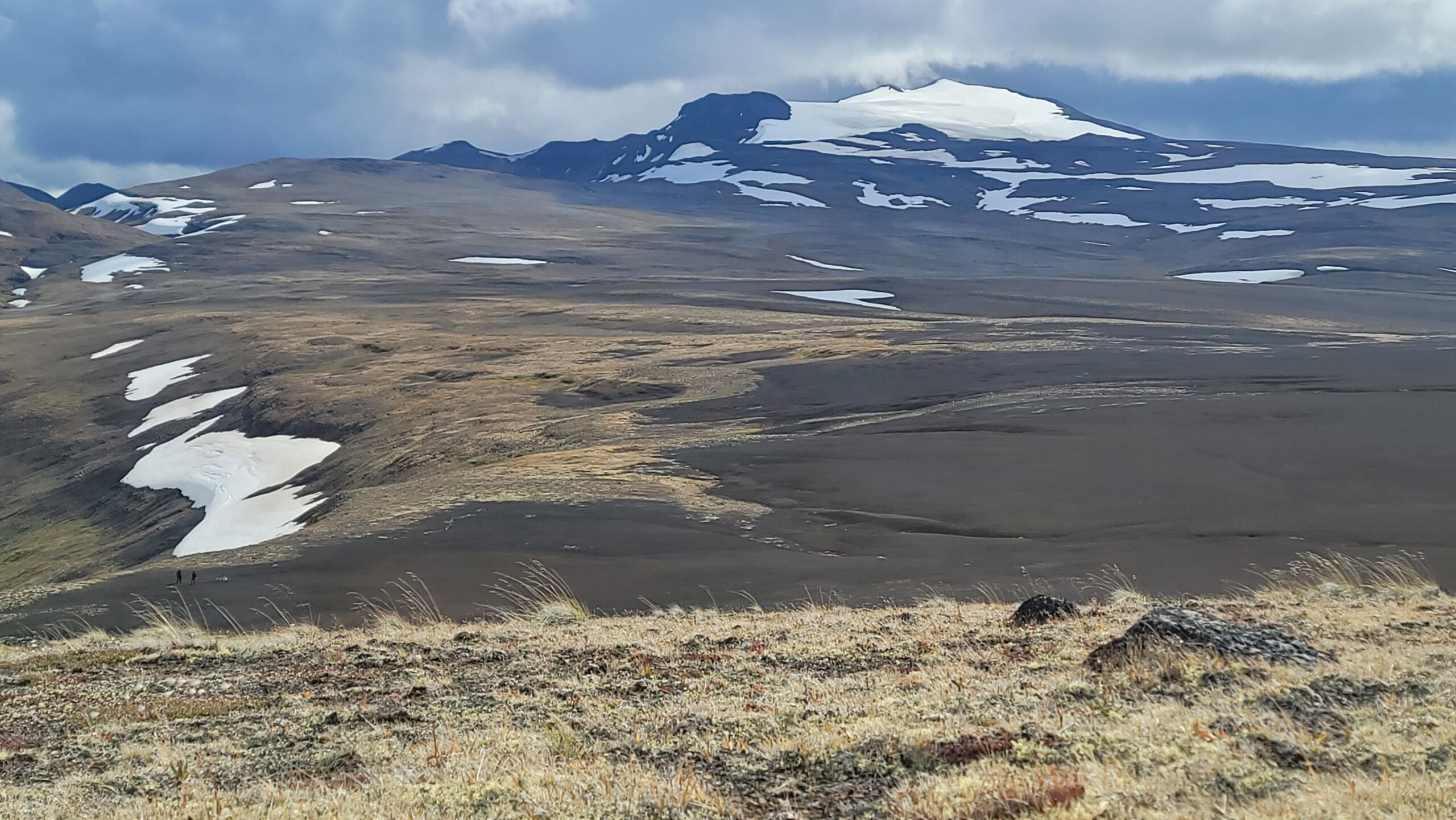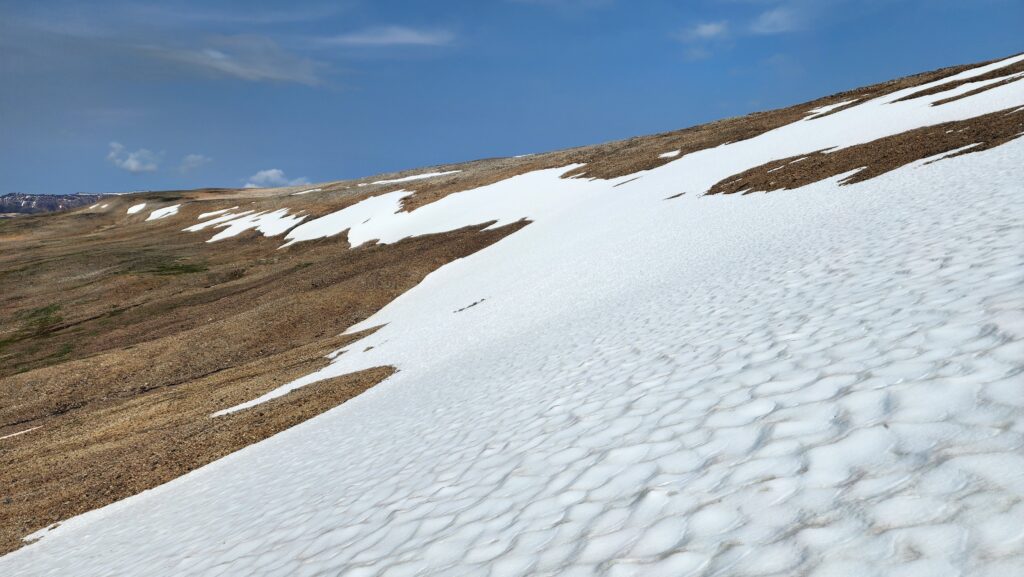
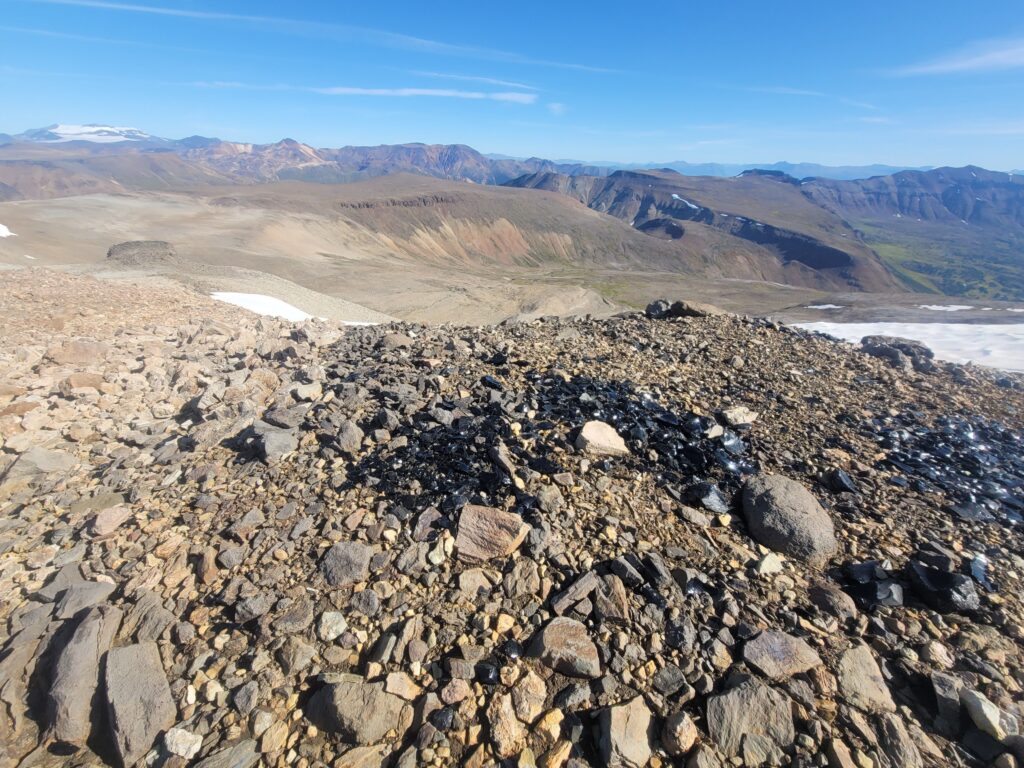
As the climate warms, ice patches have begun to melt. As the ice retreats each summer, it reveals items from our ancestors that are thousands of years old, and highly perishable. To find and learn from and preserve them, we send teams of archaeologists to walk the edge of the ice and search for artifacts. Ice patch archaeology research in Tahltan Territory began in earnest in 2019 in Mount Edziza Provincial Park. The geographic focus of this work centered around ancient obsidian quarries situated in the park and surrounding ice patches.
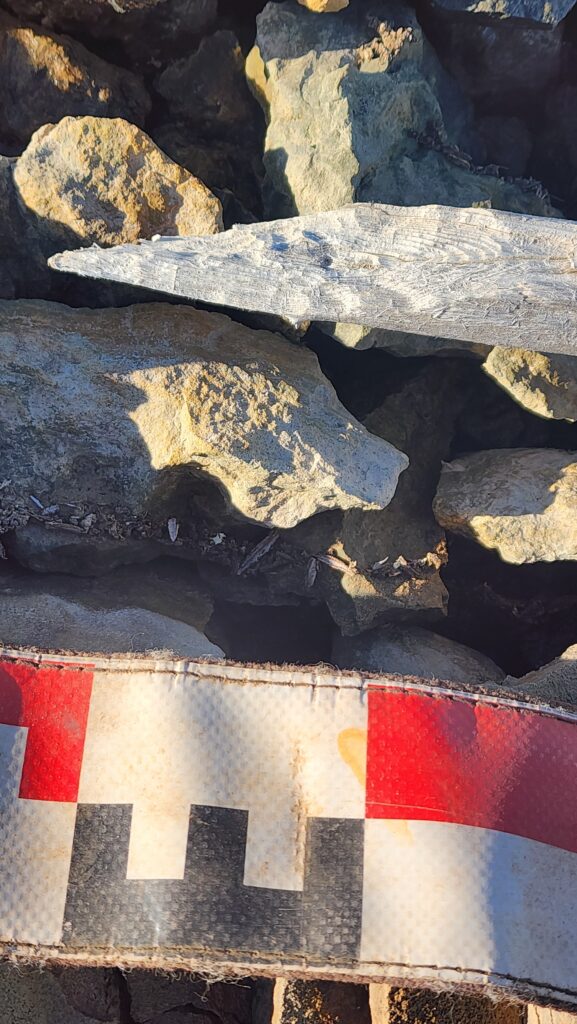
The Tahltan Central Government (TCG) Department of Language, Culture, and Heritage’s initial season of work in 2019 was extremely successful and, based on this success, two additional archaeological expeditions were dispatched in 2024 and 2026. During this work, perishable archaeological materials were found including sewn birch bark baskets, numerous wooden walking staffs, bone and antler tools, a moccasin, atlatl dart shafts, and fragments of hides and pelts.
These discoveries, made amongst a backdrop of hundreds of thousands of pieces scattered obsidian, both worked and unworked, are significant and offer insight into previously unknown dimensions of the widespread, 10,000-year-long Edziza dudāt (obsidian) trade across northwestern North America. The perishable artifacts are also unique because they can be directly radiocarbon dated unlike stone tools and obsidian.
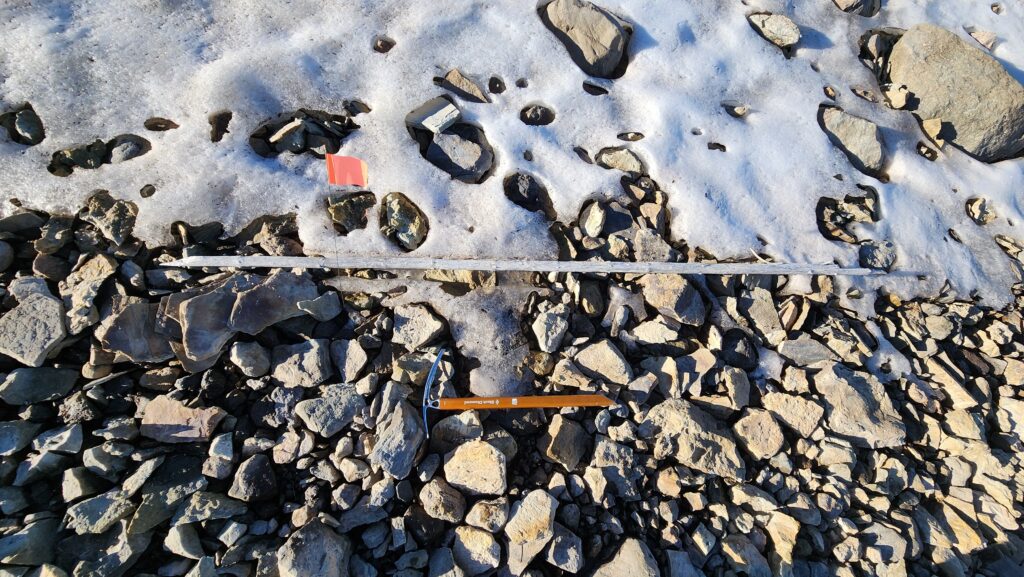
Radiocarbon ages on materials found in 2019 and 2024 demonstrate that the perishable belongings have been trapped in ice for up to 7,000 years. Preliminary analyses of ancient environmental DNA from sampled belongings demonstrate that it is well preserved and further DNA analyses are being undertaken.
Funding for this important work has been supported by BC Parks and the Tahltan Central Government. The Hakai Institute has generously provided in-kind funding for ancient DNA analysis.
Galore Creek Mining Corporation is proud to announce that we have committed Community Investment funds to this ongoing program to support radiocarbon data-based analysis on samples collected during 2026 field operations.
Read more at https://tahltan.org/ice-patch-archaeology-on-edzidzae/